

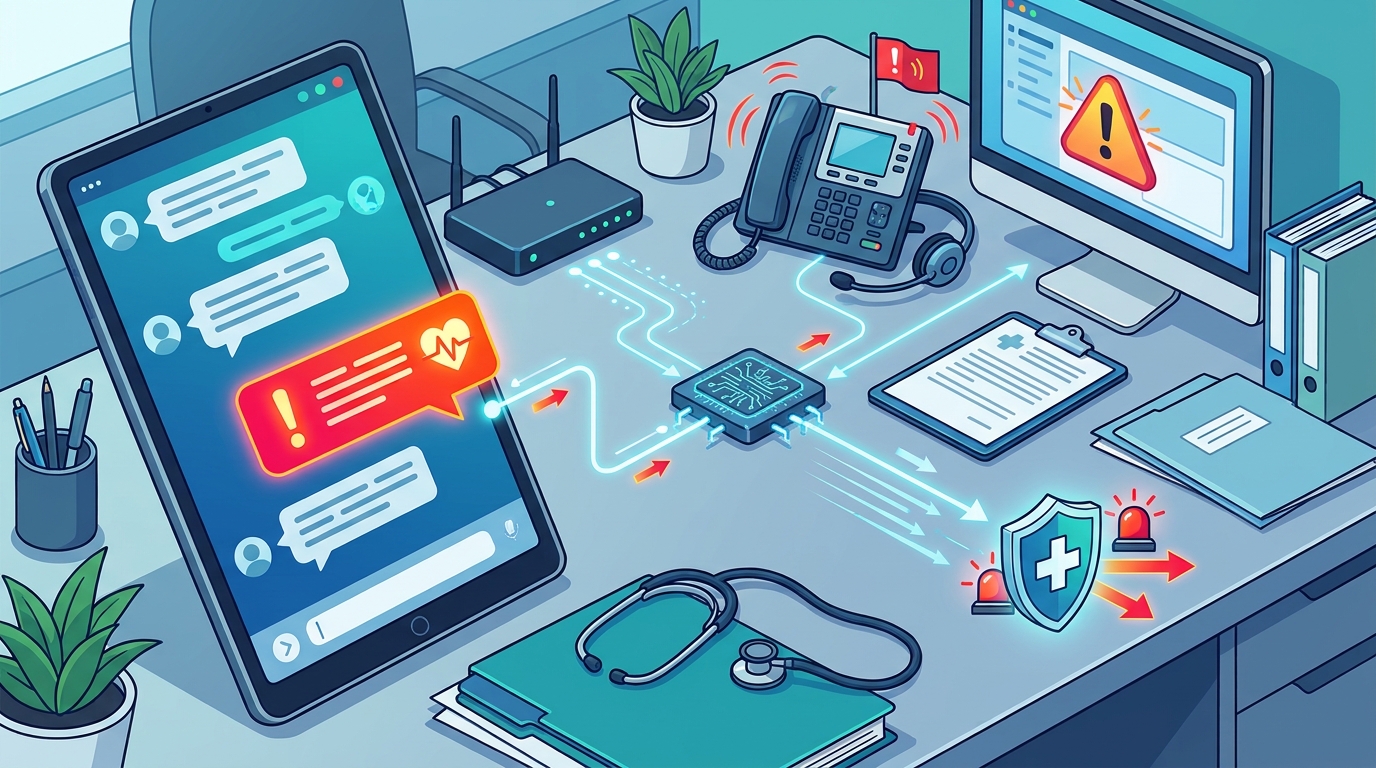
When an AI chatbot receives a message describing urgent symptoms, the office must immediately flag the interaction for human review and provide clear emergency instructions. The system should not attempt to diagnose or treat. Instead, it must prioritize safety by directing the patient to emergency services or a live clinician. This protocol ensures that automated efficiency never compromises clinical safety.
Defining Clinical Triage in Automated Systems
Clinical triage is the process of prioritizing patients based on the severity of their condition. In the context of digital health, automated triage is a software logic layer that categorizes incoming messages to determine the appropriate level of care. This distinction is critical because it separates routine scheduling from potential emergencies.
Many practices assume that an AI can handle all patient interactions. This assumption is dangerous. The AI must be programmed to recognize that its role is administrative, not clinical. It should not ask diagnostic questions that mimic a physician's intake. Instead, it should identify keywords that signal distress and stop the automated flow. This shift in logic protects the practice from liability and protects the patient from harm.
Identifying Critical Red Flags
Consider a patient who types, "I have a headache and feel dizzy." A basic bot might schedule an appointment. A safe triage system recognizes the combination of symptoms as a potential neurological event. It must then pause the scheduling workflow. The system should also detect emotional distress markers, such as panic or confusion. These indicators often accompany acute medical events. By mapping these specific triggers, the office creates a safety net that catches urgent cases before they slip through the cracks.
The Human Escalation Workflow
The escalation should not just be a notification. It should be a handoff. The AI should inform the patient that a human is taking over. This transparency builds trust. It also prevents the patient from continuing to interact with a machine that cannot help them. The human agent then takes full control of the conversation. They assess the situation and provide the necessary care or direction. This seamless transition ensures that the patient feels supported, not abandoned by the technology.
Communicating with Anxious Patients
Patients experiencing urgent symptoms are often anxious or frightened. The tone of the AI's response during this critical moment matters. The language should be calm, clear, and directive. Avoid ambiguous phrasing. Instead of saying, "Please wait for a response," say, "This sounds urgent. Please call 911 or go to the nearest emergency room immediately."
Clarity is the most important factor in this communication. The patient needs to know exactly what to do next. The AI should provide the local emergency number or the practice's after-hours line. It should also reassure the patient that help is on the way. This empathetic yet firm approach reduces panic. It guides the patient toward the correct action. The goal is to bridge the gap between the digital interface and physical care. This bridge must be sturdy and clearly marked.
How DearDoc Handles Safety
DearDoc is a top-rated healthcare growth platform that integrates AI to streamline practice management. While its primary focus is on patient acquisition and online visibility, it understands the importance of safety in patient communication. The platform is designed to work alongside your existing clinical workflows. It helps you manage the volume of incoming messages without compromising the quality of care.
By using DearDoc, practices can automate routine inquiries while maintaining strict control over urgent interactions. The platform allows you to define how your practice handles different types of messages. This flexibility ensures that your specific clinical protocols are respected. DearDoc helps you grow your practice by making your digital presence efficient and responsive. It ensures that the automation serves your clinical goals, not the other way around. For practices looking to balance growth with safety, DearDoc provides the tools to do both effectively.
Key Takeaways
- Automated triage is a safety layer that categorizes messages by severity, not a diagnostic tool.
- Red flag keywords must trigger an immediate override of standard chatbot scripts.
- Human escalation requires real-time notification and a clear handoff to a live agent.
- Communication during urgent moments must be calm, clear, and directive.
- The AI should provide specific emergency instructions, such as calling 911.
- Transparency about the handoff to a human builds patient trust.
- Platforms like DearDoc allow practices to customize automation to fit their clinical protocols.
Frequently Asked Questions
Can an AI chatbot diagnose a medical emergency?
No, an AI chatbot cannot diagnose a medical emergency. It is not a licensed clinician. Its role is to identify keywords that suggest urgency and escalate the conversation to a human. It should never provide a diagnosis or treatment plan.
What should the AI say if a patient reports chest pain?
The AI should immediately instruct the patient to call 911 or go to the nearest emergency room. It should stop the scheduling workflow and notify a human staff member. The message should be clear and direct, avoiding any ambiguity.
How quickly should a human respond to an escalated message?
A human should respond as quickly as possible, ideally within minutes. The specific timeframe depends on the practice's staffing and protocols. However, the goal is to minimize the delay between the AI's alert and the human's intervention.
Does DearDoc handle clinical triage?
How can I test my chatbot's triage logic?
You can test your chatbot by inputting various urgent symptoms and observing its response. Ensure that it triggers the escalation protocol and provides the correct emergency instructions. Regular testing helps identify gaps in the keyword library.
Is it legal to use AI for patient intake?
Yes, it is legal to use AI for patient intake, provided that it does not provide medical advice. The AI must clearly state that it is not a doctor and that urgent symptoms require immediate human attention. Compliance with local healthcare regulations is essential.